如何选择轮胎花纹深度?
1. 消费者误区:“胎纹越深=越耐用”的局限性
在汽车消费市场中,“花纹越深,轮胎越耐用”是一种普遍存在的观念。许多车主在选择轮胎时会下意识地用手指丈量胎面沟槽的深度,认为花纹越深意味着橡胶越耐磨,使用寿命也就越长。
这种假设并非毫无根据——在低速、短途的日常通勤中,更深的胎纹确实能提供更厚的橡胶层,以抵抗路面碎石的磨损,从而在一定程度上延长更换周期。
然而,当轮胎面临高速行驶和长期连续运行等复杂工况时,胎面深度与性能之间的关系呈现出一种完全不同的逻辑,而这一点往往被许多用户所忽视。
However, when tires face complex operating conditions such as high-speed driving and long-term continuous operation, the relationship between tread depth and performance takes on a completely different logic, a crucial dimension that many users tend to overlook.

2. 本质
2. The Essence of 轮胎设计:在性能平衡上的精确博弈
作为车辆唯一与路面接触的部分,轮胎设计本质上是一种精确的平衡。在开发过程中,工程师们不断面临制动距离、湿地抓地力、滚动阻力、静音性和耐用性之间的权衡。增加胎面深度以改善耐磨性,可能会增加滚动阻力和燃油消耗。
优化沟槽设计以增强排水性能,可能会因橡胶接触面积减少而降低干地制动性能。这种“一环影响全局”的特性在轮胎的耐久性和高速性能方面尤为明显。
3. 高速性能隐患:过深胎纹的散热管理难题
轮胎在高速行驶时面临的核心挑战是散热问题。当车速超过100公里/小时,胎面与路面之间的瞬时摩擦会产生大量热量,同时轮胎内部帘线和橡胶的形变也会积聚热量。
在正常情况下,这种热量通过胎面橡胶的热传导而散发,使轮胎内部温度保持在80-120°C的安全范围内。然而,当胎面深度过深,特别是肩部区域的胎面厚度超过10毫米时,热传导路径显著延长。较厚的橡胶层起到隔热作用,减缓了内部热量向外部的散发,导致轮胎内部温度持续升高。
4. 高温链式反应:数据揭示性能退化的风险
相关实验数据显示,当胎面深度从标准的6毫米增加到12毫米时,在高速行驶(120公里/小时)30分钟后,轮胎内部温度会从105°C上升至148°C,超过大多数轮胎橡胶的耐热极限。过高的温度会引发一系列连锁反应:首先,橡胶的物理性能恶化,弹性模量和硬度下降,使轮胎在受到路面冲击时更容易出现鼓包或开裂。
Under normal circumstances, this heat is dissipated through thermal conduction through the tread rubber, maintaining the internal tire temperature within a safe range of 80-120°C. However, when the tread depth is too deep, especially when the tread thickness in the shoulder area exceeds 10mm, the heat transfer path is significantly extended. The thicker rubber layer acts as a thermal barrier, slowing the dissipation of internal heat to the outside world, causing the tire's internal temperature to continue to rise.
4. High-Temperature Chain Reaction: Data Reveals the Risk of Performance Degradation
Relevant experimental data shows that when the tread depth increases from the standard 6mm to 12mm, the internal temperature of the tire rises from 105°C to 148°C after 30 minutes of high-speed driving (120km/h), exceeding the heat resistance threshold of most tire rubber. Excessive temperatures trigger a series of chain reactions: First, the physical properties of the rubber deteriorate, with a decrease in elastic modulus and hardness, making the tire more susceptible to bulging or cracking when subjected to road impact.

其次,高温会使轮胎内部的帘线和橡胶粘合层软化,降低结构强度,增加爆胎风险。最后,高温会加速橡胶老化过程,即使胎面花纹尚未磨损到极限,也会显著缩短轮胎的整体使用寿命。
5. 耐久性能不足:深花纹中的应力集中
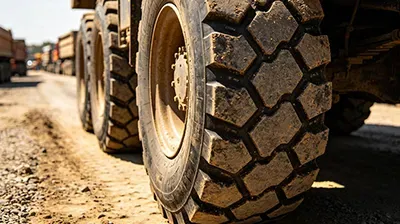
过深的胎面花纹深度也会对耐久性能带来显著挑战。对于需要长时间连续行驶的车辆(如货运卡车和长途客车),轮胎必须持续承受数小时的负载、摩擦和形变。
深花纹沟槽在反复变形过程中,容易在沟槽底部产生应力集中。当车辆行驶在颠簸路面或转弯时,胎面块的变形增大,从而增加了沟槽底部的拉伸力。
随着时间的推移,沟槽底部会逐渐产生微小裂纹。这些裂纹会随着行驶里程的增加而扩展,最终导致胎面块脱落或轮胎结构损坏。
Deep tread patterns, during this repeated deformation, are prone to stress concentration at the bottom of the grooves. When the vehicle traverses bumpy roads or turns, the deformation of the tread blocks increases, increasing the tensile forces at the groove bottom.
Over time, small cracks will gradually develop at the groove bottom. These cracks will expand with increasing mileage, eventually leading to tread block loss or tire structural damage.

6. 场景差异:考虑胎面深度适应性
更重要的是,胎面深度与性能之间的平衡也受到使用场景的影响。在多雨地区,较深的胎面确实可以通过增加沟槽容积来改善排水效果,降低打滑风险,但这种优势必须在合理的深度范围内才能实现。当胎面深度超过8毫米时,排水性能的提升逐渐减缓,而温度升高带来的安全风险却急剧增加。
相反,在干燥炎热的沙漠地区,过深的胎面花纹会阻碍散热,成为轮胎损坏的主要原因。在这种情况下,选择较浅的胎面设计反而能提高安全性和耐用性。
Conversely, in dry, hot desert regions, excessively deep tread patterns can hinder heat dissipation, becoming a major cause of tire damage. In these situations, choosing a shallower tread design can actually improve safety and durability.